
AI Bass Tab Generator
Use Tabtify as an AI bass tab generator, bass tab creator, or bass tab maker when you have a bass-forward recording, song section, or audio file and want an editable tab draft.
Or drag and drop here
MP3, WAV, M4A, OGG, FLAC, AAC, AIFF, MP4, WEBM, .mid or .midi
GP5, GPX, GP, MusicXML, MXL
Guitar, bass, 7-string or ukulele. Free export to Guitar Pro, MIDI, PDF, and MusicXML.
AI-Powered Guitar Tab Generation
Paste a link or file, get an editable draft, then play and export in the browser.
01
Paste a link or upload audio
YouTube, TikTok, Instagram, MIDI, or a recording.
02
AI writes the tab draft
Notes and rhythm land as an editable guitar tab.
03
Play, tweak, export
Loop hard bars. Export GP5, MIDI, PDF, MusicXML.
Use cases
What players convert here
Bass lines from songs
Convert a bass-forward song section into a tab draft that can be looped, checked, and edited.
Practice grooves
Upload your own bass recording and turn the idea into notation for practice or teaching.
5-string and 6-string parts
Choose the bass setup before conversion so low notes and extended-range lines map more naturally.
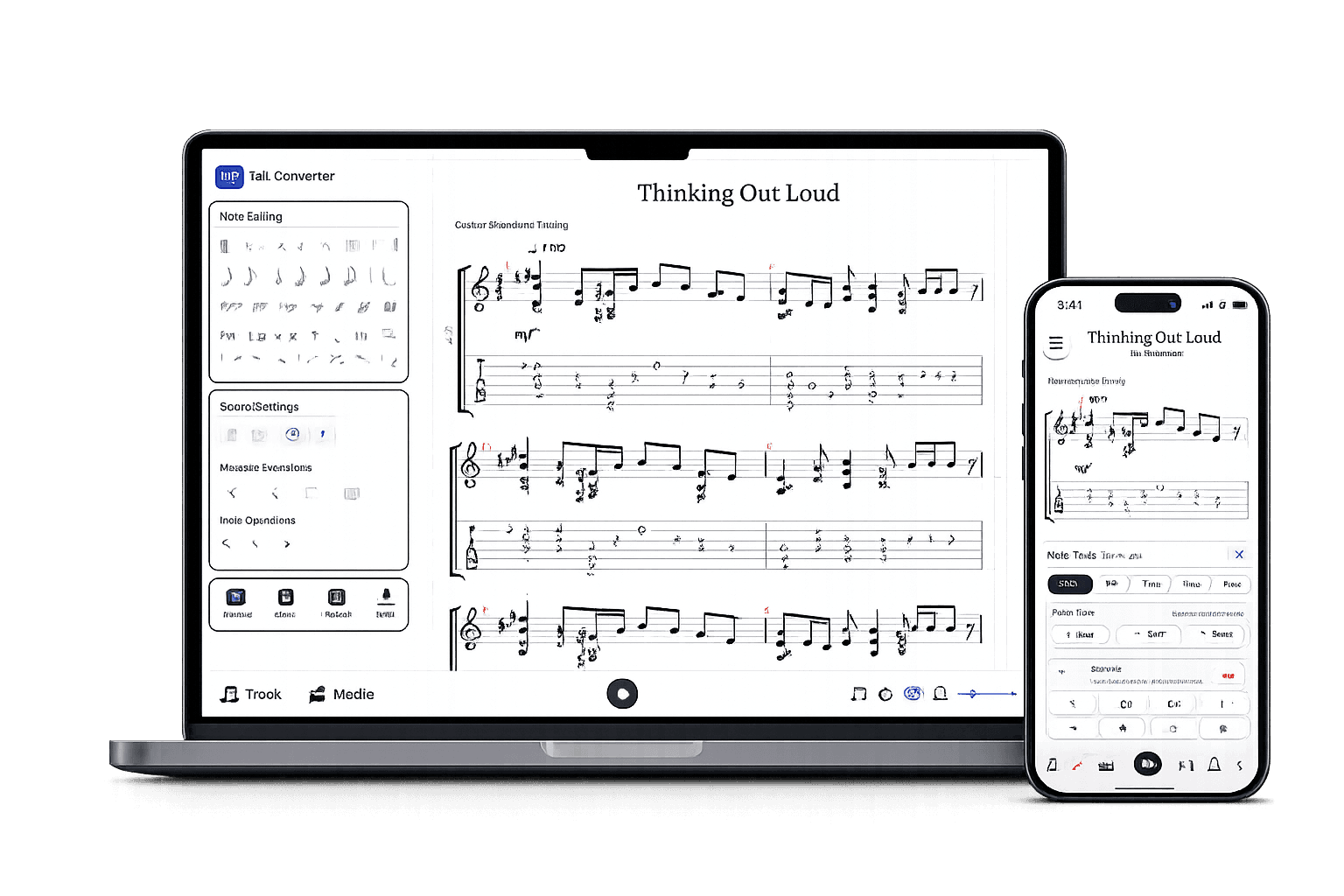
After the AI draft
A real tab editor, not a static download.
Play it back, edit any note, open GP5 or MusicXML you already have, and export in the format you need.
Edit the draft
Fix notes, timing, measures, and fret choices.
Check by ear
Play back, loop bars, match the source.
Export when ready
Guitar Pro, MIDI, PDF, MusicXML.
Bass tabs made by Tabtify
Open any of them in the editor: play along with media sync, change a note, export to Guitar Pro or PDF.
Master Of Puppets
Metallica
Everlong
Foo Fighters
Whole Lotta Love
Led Zeppelin
Black Dog
Led Zeppelin
Hysteria (intro)
Muse
Here Cpmes The Sun
The Beatles
La Poderosa Hidden Track
Stick To Your Guns
Californication
Red Hot Chili Peppers
The Trooper
Iron Maiden
Stairway To Heaven
Led Zeppelin
Highway to Hell
AC/DC
Tommy the Cat
Primus
Frequently Asked Questions
Everything you need to know about Tabtify's AI-powered guitar tab creation platform. From audio conversion to professional export formats.
Can Tabtify generate bass tabs from audio?
Can I use this as a bass tab creator or bass tab maker?
Does it support 5-string and 6-string bass?
What audio works best for bass transcription?
Can I edit the generated bass tab?
Related converters
Other ways to start
Converter notes
From source to editable tab
These notes are here for setup context. The main workflow starts above in the converter, then continues in the editor.
- Supports 4-string, 5-string, and 6-string bass setup before transcription.
- Works from audio uploads, MP3 files, recordings, and public media links.
- Opens the result in the editor so grooves, positions, and repeated bars can be corrected.
Steps
- 01Upload a bass recording, MP3, audio file, or supported public media link.
- 02Choose the bass setup and 4, 5, or 6 strings; adjust tuning in Advanced if needed.
- 03Run AI transcription and open the generated bass tab in the editor.
- 04Check the groove with playback, fix positions, then save or export the tab.
Source quality
- Use the cleanest bass-forward source you have, especially when drums and guitars are loud.
- Choose 4-string, 5-string, or 6-string bass setup before conversion.
- Short grooves and isolated bass parts are easier to verify than dense full mixes.
- Kick drum, low guitar, synth bass, and room noise can confuse bass transcription.
- Slap, ghost notes, slides, and muted notes often need human review in the editor.
- AI output should be treated as a first draft for cleanup, not a final published tab.