
MP3 to MIDI
MP3 is what most people actually have on disk. Upload it, let the note detection run, then take the .mid into whatever you build with.
Or drag and drop here
MP3, WAV, M4A, OGG, FLAC, AAC, AIFF, MP4, WEBM, .mid or .midi
GP5, GPX, GP, MusicXML, MXL
Guitar, bass, 7-string or ukulele. Free export to Guitar Pro, MIDI, PDF, and MusicXML.
AI-Powered Guitar Tab Generation
Paste a link or file, get an editable draft, then play and export in the browser.
01
Paste a link or upload audio
YouTube, TikTok, Instagram, MIDI, or a recording.
02
AI writes the tab draft
Notes and rhythm land as an editable guitar tab.
03
Play, tweak, export
Loop hard bars. Export GP5, MIDI, PDF, MusicXML.
Use cases
What players convert here
Old bounces and demos
Recover the note data from an MP3 demo when the original session is long gone.
Practice loops
Convert a riff to MIDI, then slow it down or transpose it without the audio artifacts.
Rebuilding a part
Take the notes from an MP3 you own and play them back through a different instrument.
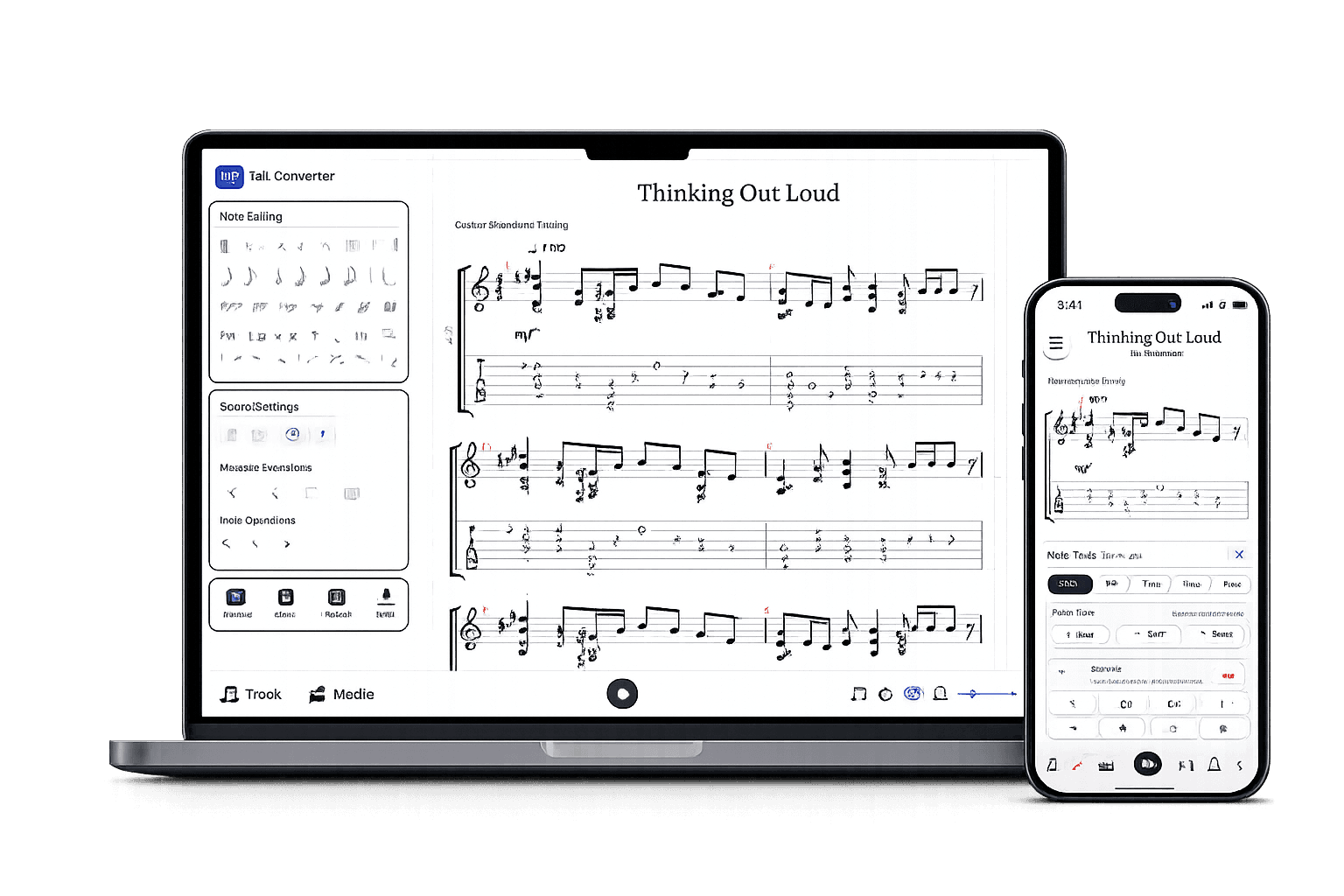
After the AI draft
A real tab editor, not a static download.
Play it back, edit any note, open GP5 or MusicXML you already have, and export in the format you need.
Edit the draft
Fix notes, timing, measures, and fret choices.
Check by ear
Play back, loop bars, match the source.
Export when ready
Guitar Pro, MIDI, PDF, MusicXML.
Tabs made by Tabtify
Open any of them in the editor: play along with media sync, change a note, export to Guitar Pro or PDF.
Wonderwall
Oasis
Sweet Child O' Mine
Guns N Roses
Blackbird
The Beatles
Highway to Hell
AC/DC
Welcome To the Jungle
Guns N Roses
Every Breath You Take
The Police
The Trooper
Iron Maiden
One
Metallica
Paradise City
Guns N Roses
American Idiot
Green Day
Hysteria (intro)
Muse
Layla
Eric Clapton
Frequently Asked Questions
Everything you need to know about Tabtify's AI-powered guitar tab creation platform. From audio conversion to professional export formats.
Is MP3 good enough, or should I find a WAV?
Will it separate the guitar from the rest of the band?
What size MP3 can I upload?
Can I edit the MIDI here or do I need a DAW?
Is this free to use?
Can I turn the result into sheet music?
Related converters
Other ways to start
Converter notes
From source to editable tab
These notes are here for setup context. The main workflow starts above in the converter, then continues in the editor.
- Reads MP3 directly, no re-encoding step before you start.
- Notes appear on a fretboard you can edit before anything gets exported.
- Output is a plain .mid file, not a proprietary project format.
Steps
- 01Upload the MP3 in the Audio tab.
- 02Choose the instrument, tuning, and capo that match the recording.
- 03Run the conversion and wait for the editor to open.
- 04Correct the notes you disagree with, then export MIDI.
Source quality
- Higher bitrate helps. A 320 kbps MP3 gives the detector more to work with than a 96 kbps one.
- An isolated part beats a full mix every time, even at lower bitrate.
- Cut the intro silence so the first note lands where you expect it.
- MP3 compression throws away detail, so a lossless source will usually score better.
- Vocals, drums, and guitar in one MP3 will bleed into each other during detection.
- Conversion is built around sources up to 15 minutes.