
Guitar Transcriber
Use Tabtify as a guitar transcriber and guitar tab transcriber when you want more than note detection: add a source, choose a playable setup, then edit the generated tab.
Or drag and drop here
MP3, WAV, M4A, OGG, FLAC, AAC, AIFF, MP4, WEBM, .mid or .midi
GP5, GPX, GP, MusicXML, MXL
Guitar, bass, 7-string or ukulele. Free export to Guitar Pro, MIDI, PDF, and MusicXML.
AI-Powered Guitar Tab Generation
Paste a link or file, get an editable draft, then play and export in the browser.
01
Paste a link or upload audio
YouTube, TikTok, Instagram, MIDI, or a recording.
02
AI writes the tab draft
Notes and rhythm land as an editable guitar tab.
03
Play, tweak, export
Loop hard bars. Export GP5, MIDI, PDF, MusicXML.
Use cases
What players convert here
Recordings to tab
Upload a clean guitar recording and turn it into a tab draft for practice, teaching, or arrangement work.
Video lessons and covers
Paste a public lesson or cover link when the guitar part is clear and you need editable notation.
Riffs, solos, and ideas
Transcribe shorter parts first, then refine fret choices, rhythm, and repeated sections in the editor.
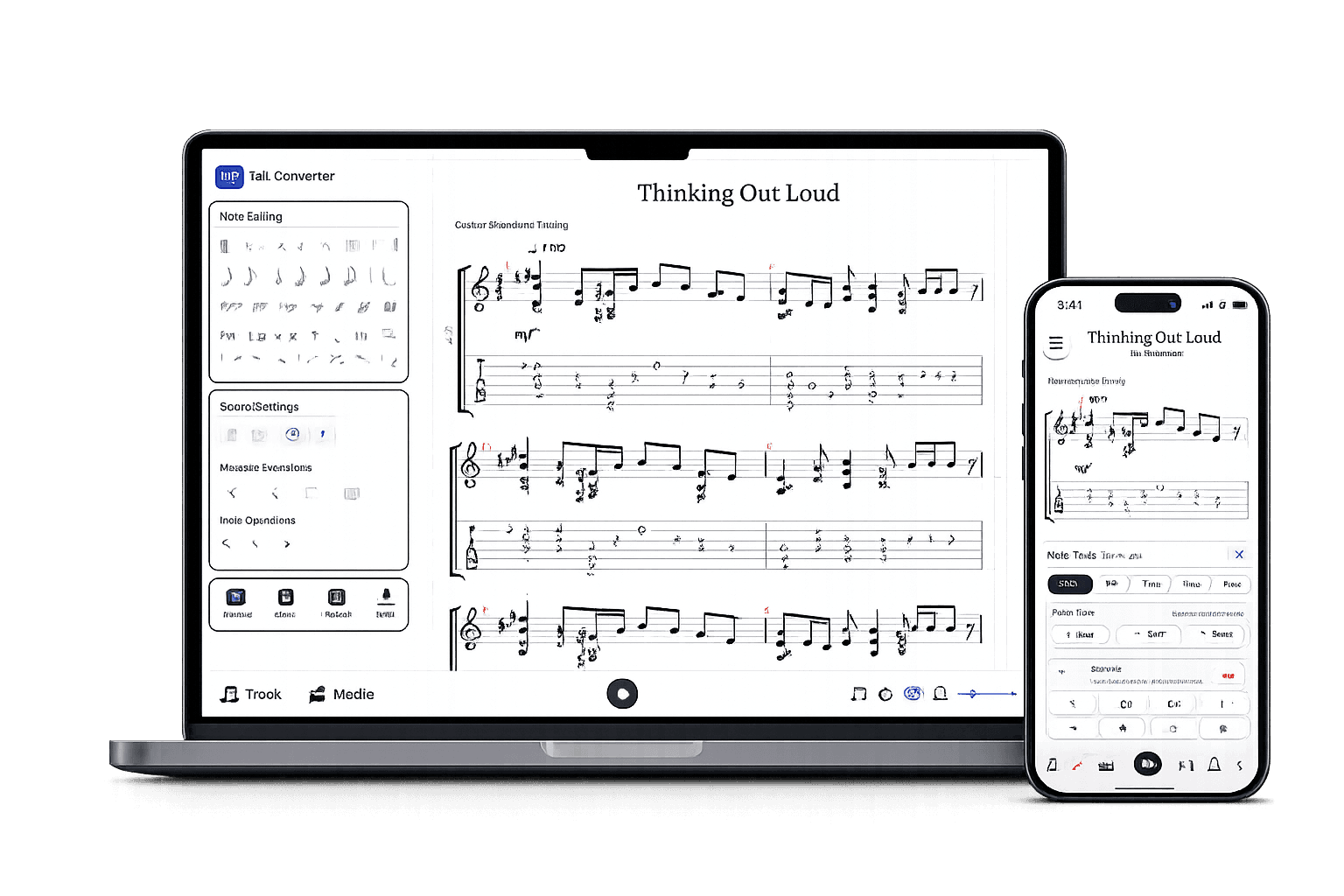
After the AI draft
A real tab editor, not a static download.
Play it back, edit any note, open GP5 or MusicXML you already have, and export in the format you need.
Edit the draft
Fix notes, timing, measures, and fret choices.
Check by ear
Play back, loop bars, match the source.
Export when ready
Guitar Pro, MIDI, PDF, MusicXML.
Guitar tabs made by Tabtify
Open any of them in the editor: play along with media sync, change a note, export to Guitar Pro or PDF.
Angelina
Tommy Emmanuel
Yesterday
The Beatles
Viva La Vida
Boyce Avenue
Champagne Supernova
Oasis
Blackbird
The Beatles
Yellow
Coldplay
Smells Like Teen Spirit
Nirvana
Lithium
Nirvana
november rain
Guns N Roses
Message In A Bottle
Machine Head
Air from "Suite no 3"
Johann Sebastian Bach
Hysteria (intro)
Muse
Frequently Asked Questions
Everything you need to know about Tabtify's AI-powered guitar tab creation platform. From audio conversion to professional export formats.
Can Tabtify transcribe guitar to tabs?
Can I use this as a guitar tab transcriber?
Is this guitar transcriber fully automatic?
What source works best for guitar transcription?
Can I export the transcription to GP5?
How is this different from slowing the song down and tabbing by ear?
Does it transcribe two guitars at once?
Related converters
Other ways to start
Converter notes
From source to editable tab
These notes are here for setup context. The main workflow starts above in the converter, then continues in the editor.
- Starts from audio files, public media links, MIDI files, or browser recordings.
- Maps transcription into guitar, bass, 7-string, or ukulele tab positions.
- Opens the result in a real editor for playback, cleanup, and export.
Steps
- 01Upload audio, paste a public media URL, upload MIDI, or record directly in the browser.
- 02Choose the instrument setup, then adjust tuning and capo in Advanced if needed.
- 03Run the AI guitar transcription and open the generated tab in the studio.
- 04Use playback, loop, media sync, and note editing to clean up the result.
Source quality
- Use the clearest source you have, ideally with the target guitar part forward in the mix.
- Choose the instrument setup, then adjust tuning and capo in Advanced if needed.
- Short riffs, solos, and lesson sections are usually easier to verify than full dense mixes.
- AI guitar transcription is a strong first draft, not a guaranteed final tab.
- Vocals, drums, room noise, heavy effects, or overlapping instruments can reduce accuracy.
- The editor is where you should check timing, string choices, bends, slides, and repeated bars.