How-to
What to Do When a Song Has No Tabs
You found the song, you know the part you want, and every search comes back empty. That happens most with deep cuts, new releases, local bands and anything outside the usual cover-song canon. Below are six ways to get a usable tab anyway, in the order worth trying them: the first ones are quick, the last ones always work.
 By the Tabtify teamUpdated October 5, 20267 min read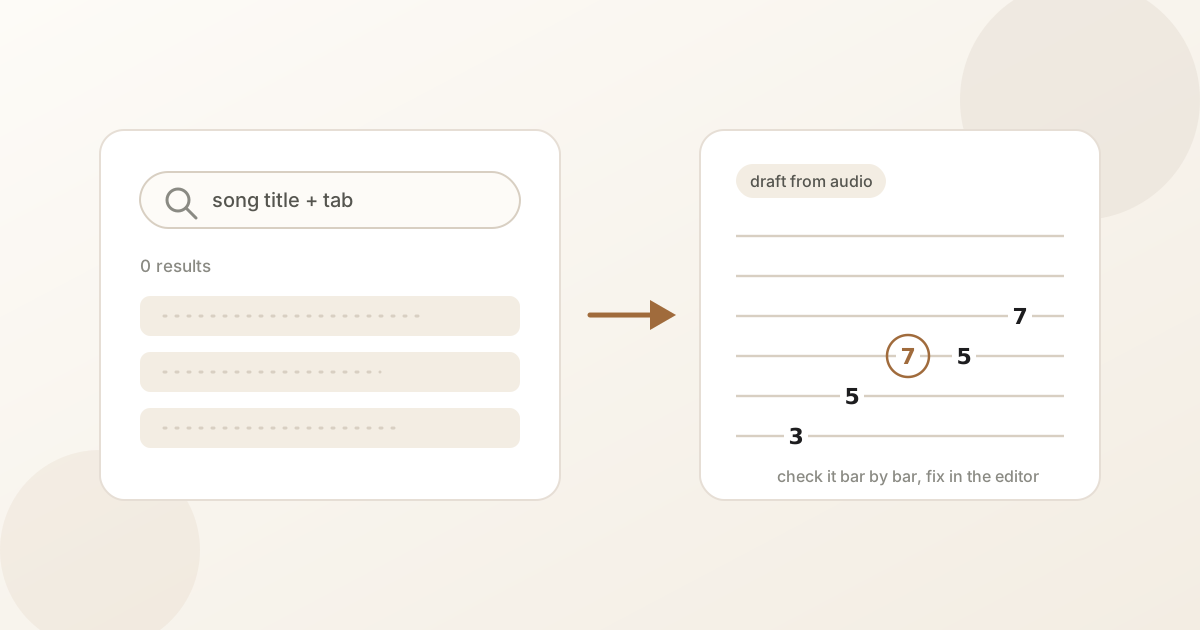
In short: No tab online for the song you want? Check the right places, ask other players, work it out by ear, or start from an AI draft you fix yourself.
1. Make sure it is really missing
Tab sites file songs under whatever title the uploader typed, so an empty search often means a different spelling rather than a missing tab. Spend five minutes on these searches before moving on.
- The title with "tab", "bass tab" and "chords" as separate searches, since each part is often uploaded on its own.
- Alternate titles: the original release name, a translated title, or the name used on the album.
- The live or acoustic version, which sometimes has a tab when the studio version does not.
- The artist name plus "guitar lesson" or "playthrough": some artists teach or film their own parts.
2. Look beyond the big tab sites
Plenty of accurate transcriptions never reach the large community sites. Official songbooks and transcription books are the most reliable source when they exist, because they are made for publication and checked before print.
Guitar magazines print full transcriptions of popular tracks, lesson channels often post a tab next to the video, and forums built around one band or one genre can hold transcriptions nobody uploaded anywhere else.
3. Ask someone who has already worked it out
Request threads on guitar forums and genre communities exist for exactly this. Give the full title, the artist, the album or year, the part you want (rhythm, lead or bass) and a link to the recording, so a volunteer can start right away.
A teacher is the other route. Working out a song together is a normal lesson, and you leave with the method as well as the part.
4. Work it out by ear
If nobody has written it down, you can. The short version: find the key from the lowest notes, loop two to four bars at reduced speed, sketch the chords before the lead lines, and write each section down as soon as it matches the recording. Our guide to learning songs by ear walks through each step.
It is the slowest option on this page, and the only one that also makes the next song easier.
5. Start from an AI draft and correct it
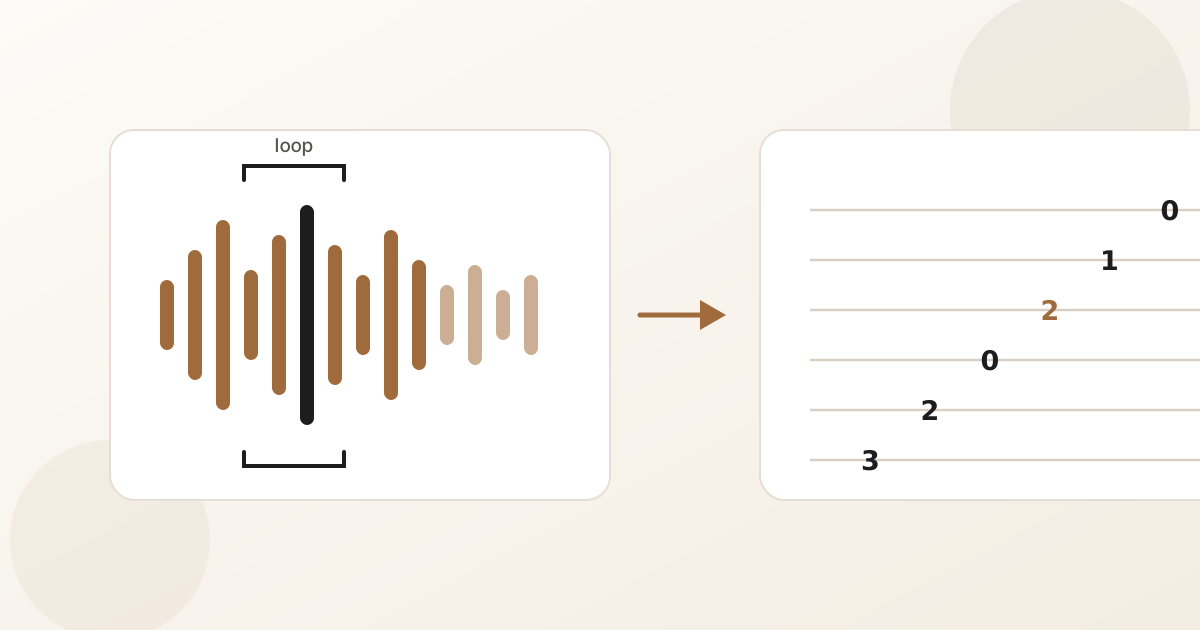
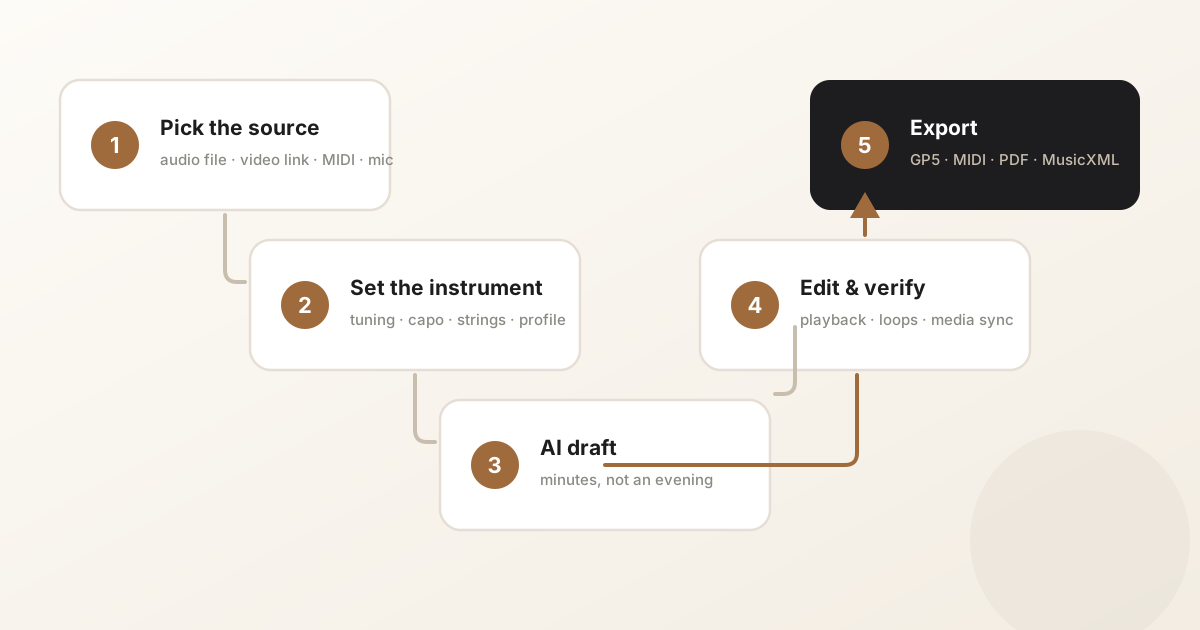
An audio-to-tab converter gives you a first draft of the whole part from the recording, which turns hours of hunting for notes into checking and fixing them. Expect a draft, not a finished tab. For a song with no tab, the recording you feed it decides more of the result than any setting, so prepare it first.
- Pick the cleanest version of the song you can find: a studio release over a phone-filmed live clip, an acoustic or unplugged take when one exists.
- Convert only the part you need, 8 to 16 bars at a time, instead of the whole track.
- Set the instrument, tuning and capo before converting, so the draft lands on the right strings.
- Use an isolated guitar or bass stem if you have one; fewer instruments means fewer stray notes.
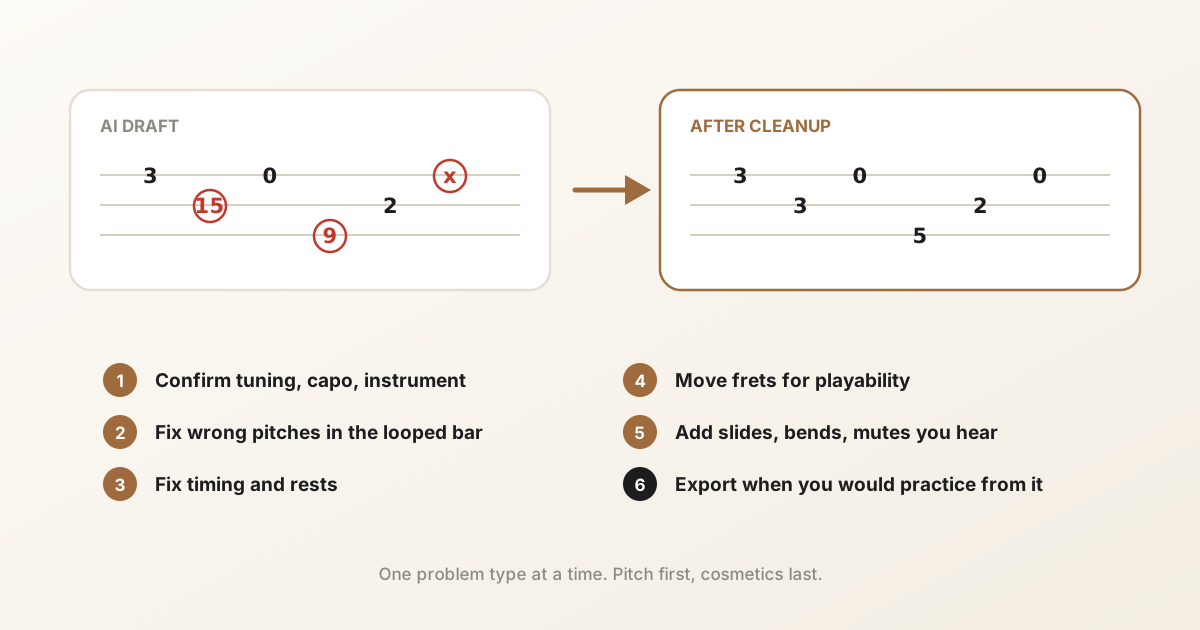
- Play the draft against the recording one short section at a time, fixing pitch before rhythm before fingering. Our guide to cleaning up AI-generated tabs lists the mistakes that show up most.
- On Tabtify the draft opens in an editor with playback synced to the source, so you can loop a bar and fix it in place. Conversion is a paid feature and takes recordings up to 15 minutes.
6. Save it so the next person finds it
Once the tab matches the recording, export it in a format other players can open: Guitar Pro (GP5) for playback in tab software, MusicXML for notation programs, or a PDF for print. A finished transcription of a song with no tab is useful to everyone who searches for it after you.
Common questions
Why do some songs have no tabs at all?
Tabs are written by volunteers, so coverage follows popularity. Recent releases, small artists, non-English songs and instrumental tracks are the most common gaps, along with less popular parts such as bass lines and second guitars.
How long does it take to tab a song by ear?
For a simple rhythm part you know well, an evening. A full song with solos can take several sessions. Starting from a draft and correcting it usually cuts that time, because you spend it checking notes rather than searching for them.
Should I ask for a tab or try it myself first?
Do both. Post the request, then start on the easiest section yourself. If someone answers, you can compare their version with yours, which is one of the fastest ways to train your ear.
Have a recording of the part?
Upload it and get an editable tab draft you can check bar by bar against the original. Conversion is included with Pro.
Free tools
Next steps
Try it on your own recording
Related guides
All guides