
Riff to Guitar Tab
Turn short guitar riffs from audio files, YouTube Shorts, TikTok, Instagram, or recordings into editable guitar tabs with AI setup and playback.
Or drag and drop here
MP3, WAV, M4A, OGG, FLAC, AAC, AIFF, MP4, WEBM, .mid or .midi
GP5, GPX, GP, MusicXML, MXL
Guitar, bass, 7-string or ukulele. Free export to Guitar Pro, MIDI, PDF, and MusicXML.
From the converter
Tabs made by Tabtify
Open any of them in the editor: play along with media sync, change a note, export to Guitar Pro or PDF.
AI-Powered Guitar Tab Generation
Tabtify is a guitar tab maker for anything you can play or paste. The AI turns chords, riffs, and fingerpicking into a tab you can edit, play, and export.
Audio to guitar tab, MIDI to guitar tab, YouTube to guitar tab, plus TikTok, Instagram, and other public links.
01
Paste a link or upload audio
YouTube, TikTok, Instagram, MIDI, or a recording.
02
AI writes the tab draft
Notes and rhythm land as an editable guitar tab.
03
Play, tweak, export
Loop hard bars. Export GP5, MIDI, PDF, MusicXML.
Use cases
What players convert here
Social riffs
Capture a memorable riff from YouTube Shorts, TikTok, Instagram, or a quick public lesson clip.
Practice loops
Turn the phrase into a tab you can slow down, loop, and move through bar by bar.
Original ideas
Record a quick idea before it disappears, then convert it into a cleaner tab draft later.
Before you hit convert
Best source
A 10-60 second clip where the riff is louder than the voiceover, drums, or backing track.
Setup choice
For solos and melodic lines, choose a recording where each note is easy to hear.
Expected cleanup
Check duplicate loop bars, slides, and muted notes after the AI draft opens in the editor.
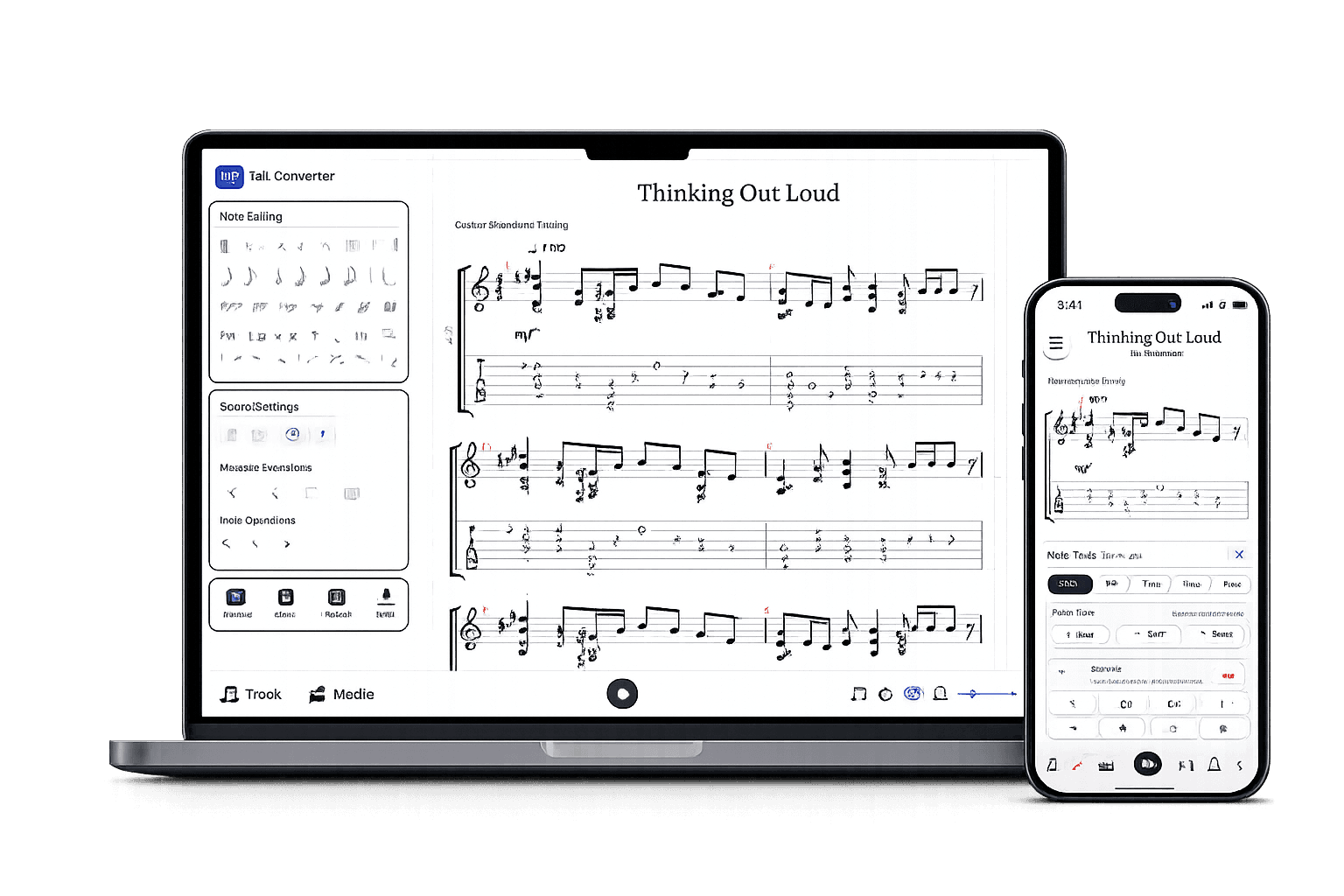
After the AI draft
A real tab editor, not a static download.
Play it back, edit any note, open GP5 or MusicXML you already have, and export in the format you need.
Edit the draft
Fix notes, timing, measures, and fret choices.
Check by ear
Play back, loop bars, match the source.
Export when ready
Guitar Pro, MIDI, PDF, MusicXML.
Frequently Asked Questions
Everything you need to know about Tabtify's AI-powered guitar tab creation platform. From audio conversion to professional export formats.
Can AI convert a short guitar riff into tabs?
Should I upload audio or paste a link?
Can I edit the riff after conversion?
Related paths
Other ways to start
Workflow notes
From source to editable tab
These notes help choose a better source and setup. The main action still starts in the converter above.
Made for: Guitar players learning ideas from clips, lessons, and covers.
- Works best with short, focused guitar phrases that are easy to review.
- Choose the instrument setup, then adjust tuning and capo in Advanced if needed.
- Open the draft in the tab editor to loop, slow down, and clean up notes.
Steps
- 01Paste a public media link or upload a short audio file with the riff.
- 02Preview the source metadata and confirm the clip is focused enough.
- 03Choose the instrument setup, then adjust tuning and capo in Advanced if needed.
- 04Convert the riff, then loop and refine the generated tab in the editor.
Setup checklist
- Confirm the clip is focused on one riff or phrase.
- Choose the instrument setup, then adjust tuning and capo in Advanced if needed.
- Use the cleanest public link or upload the original audio.
Source quality
- Trim the source to the riff when possible instead of converting a full song.
- Avoid clips with loud voiceover over the guitar part.
- Choose the instrument setup, then adjust tuning and capo in Advanced if needed.
After the draft
- Loop the first two bars and check the rhythm.
- Move awkward notes to nearby strings where needed.
- Remove repeated bars from looping social clips.
- AI transcription is a strong draft, but dense mixes can still need cleanup in the editor.