
How-to
How to Read Guitar Tabs: Every Symbol Explained
Guitar tab is the fastest notation to learn: six lines for six strings, numbers for frets, and a handful of letters for technique. This guide walks through all of it, from the first riff you can play in minutes to the symbols that trip most beginners.
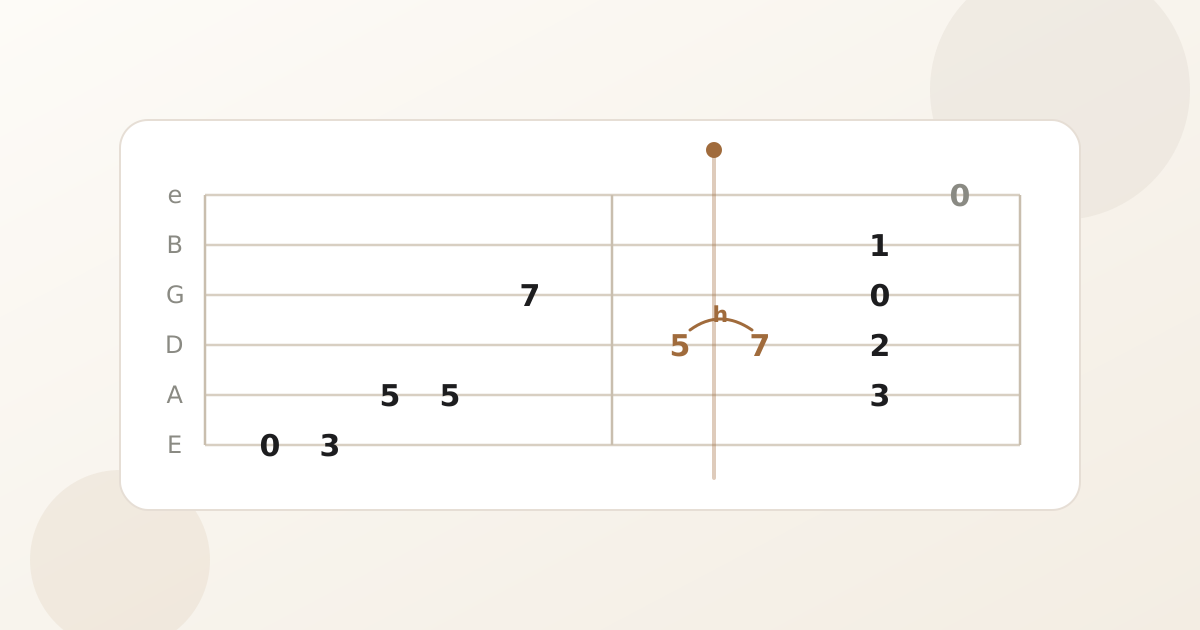
In short
Guitar tab lines, fret numbers, and every common symbol - hammer-ons, pull-offs, slides, bends, muted notes, and chords - explained with diagrams you can play from today.
The six lines and what the numbers mean
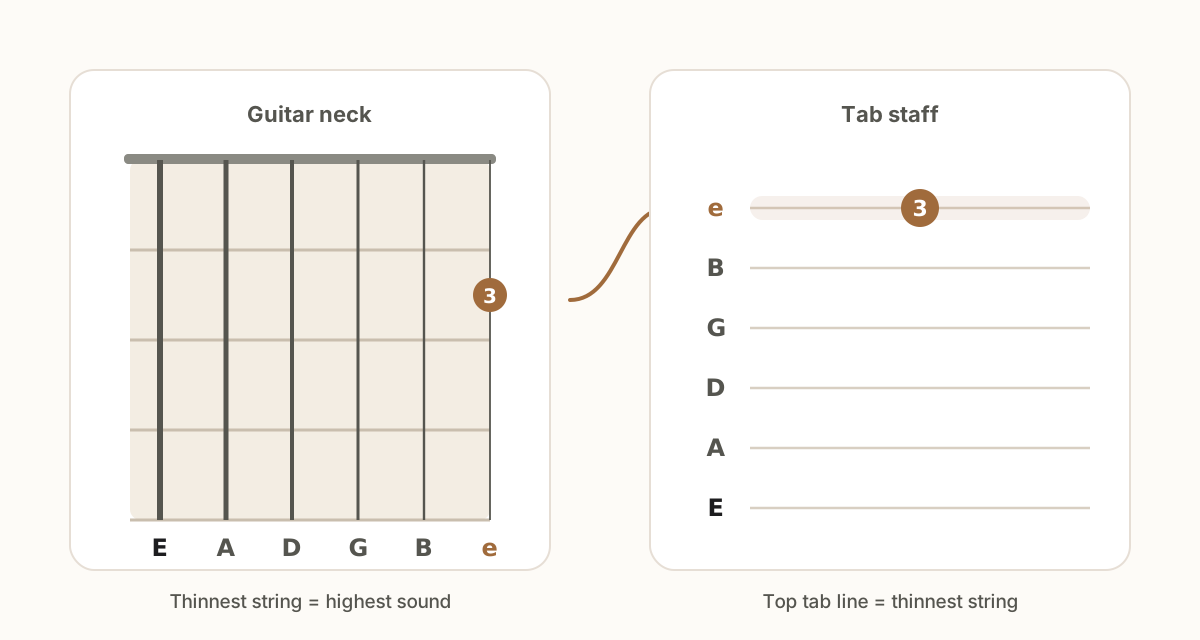
A tab staff has six horizontal lines, one per string. The confusing part for every beginner: the top line is the thinnest string (high e), the one closest to the floor when you hold the guitar. The bottom line is the thick low E.
A number on a line tells you which fret to press on that string. 0 means play the string open, without pressing anything. 3 means press the third fret. Read left to right, exactly like text.
That is genuinely the whole core system. Everything else in tab is decoration on top of these two rules.
Chords: numbers stacked vertically
When several numbers sit in the same vertical column, you play those strings at the same time. A tall stack across five or six lines is a strummed chord. Two or three numbers stacked is a partial chord or double stop.
An open C major chord in tab reads, from low string to high: 3 2 0 1 0, with the low E string silent. Once you have seen a few of these, you start recognizing chord shapes at a glance without reading each number.
Hammer-ons, pull-offs, and slides
These three symbols cover most of what makes tab feel alive instead of robotic.
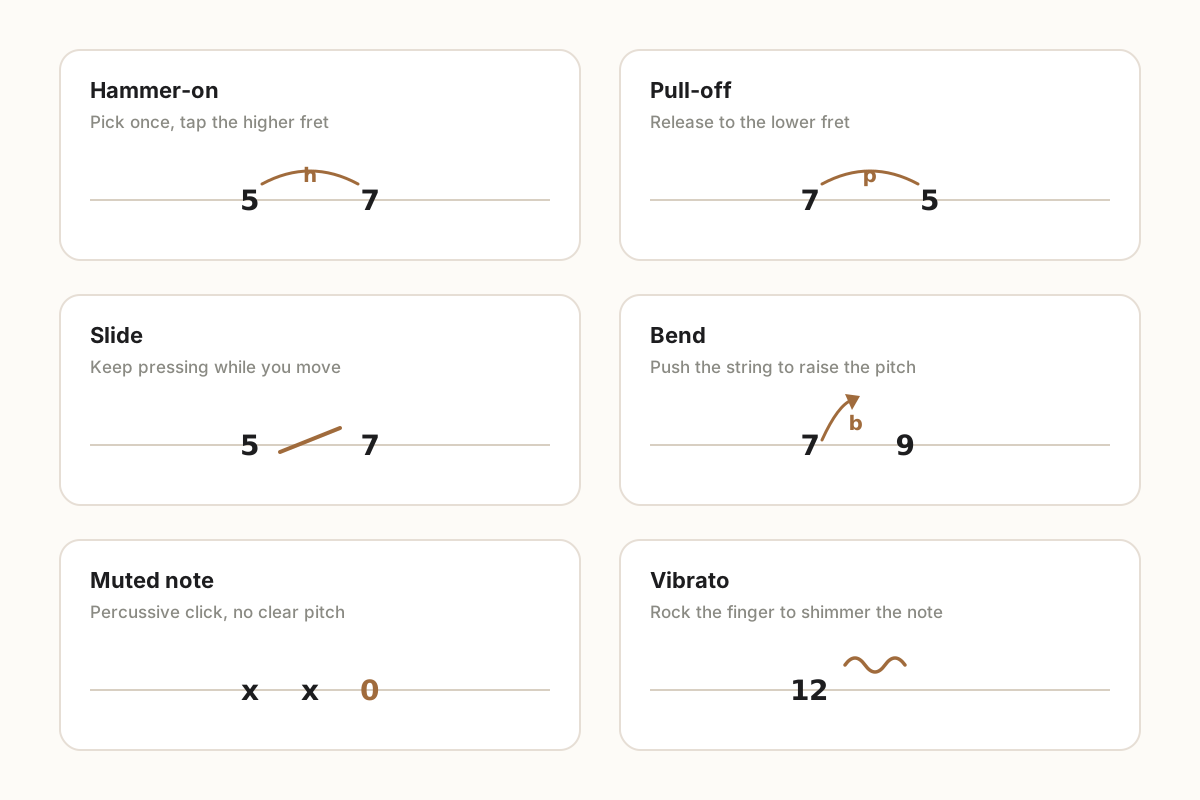
A hammer-on (5h7) means pick the note at fret 5, then bring a second finger down hard onto fret 7 without picking again. A pull-off (7p5) is the reverse: pick at 7, then flick the finger off so fret 5 sounds. A slide (5/7 sliding up, or 7\5 sliding down) means keep the finger pressed while it moves along the string.
All three connect two notes with one pick stroke, which is why fast passages lean on them so much.
Bends, vibrato, and releases
A bend (7b9) means press fret 7 and push the string sideways until it sounds like the note at fret 9. The number after the b is the target pitch, not a fret you touch. A release (9r7) lets a bent string back down while it rings.
Vibrato is marked with a wavy line or a tilde after the number. Rock the finger to make the pitch shimmer. Start bends slow and check the target pitch against the plain fretted note - out-of-tune bends are the most audible beginner mistake on electric guitar.
Muted and percussive notes
An x on a line is a muted note: rest the fretting hand on the string so the pick produces a click instead of a pitch. Funk and rock rhythm parts are full of them.
PM with a dashed line means palm muting: rest the picking-hand palm lightly on the strings near the bridge while you pick. The note still has pitch, just darker and tighter. Do not confuse the two - x has no pitch at all.
What tab does not tell you: rhythm
Plain text tab has one famous weakness: it shows which notes to play but not how long each one lasts. Two numbers close together might be fast or slow - the tab alone cannot say.
That is why most players learn a song with the recording playing alongside the tab. It is also why modern tab formats matter: Guitar Pro files and interactive tabs carry full rhythm information, so the tab plays back in time and you can hear exactly how a bar should sound before you attempt it.
- ASCII tab: positions only, rhythm lives in your ear
- Guitar Pro / MusicXML: positions plus exact rhythm and tempo
- Interactive tab players: press play, hear the bar, copy it
A 20-minute plan to make tabs feel natural
Reading tab is a skill you build in days, not months. Pick one riff you already know by sound - knowing how it should sound lets your ear correct your reading. Play it from tab at half speed, saying the string and fret out loud on the hard beats.
Then do the reverse exercise once: take four bars you can already play and write them down as tab, on paper or in a free online tab maker. Writing tab forces you to understand every symbol you have been reading, and it cements the string-to-line mapping faster than reading alone.
Common questions
What do the numbers on guitar tabs mean?
Each number is a fret on the string that line represents. 0 is the open string, 3 is the third fret. Numbers stacked vertically are played together as a chord.
Why is the thickest string at the bottom of the tab?
Tab mirrors your view when you look down at the guitar in playing position: the thin high e string is closest to the floor and sits on the top line. It feels inverted for about a week, then becomes automatic.
What does h, p, b, and x mean in guitar tab?
h is a hammer-on, p is a pull-off, b is a bend up to the pitch of the fret after the letter, and x is a muted percussive note with no clear pitch. Slashes mark slides between frets.
How do I know the rhythm from a tab?
Plain text tab does not encode rhythm, so learn with the recording playing. Guitar Pro-style tabs and interactive tab players do carry rhythm, and can play each bar back so you hear the timing before you play it.
Is tab easier to learn than sheet music?
For guitar, yes. Tab tells you exactly where to put your fingers, which sheet music leaves ambiguous because the same pitch exists in several places on the neck. Most guitarists read tab first and add notation later if they need it.
Next steps