
Audio to Guitar Tab Converter
Upload a song as MP3, WAV, M4A, FLAC, or another audio file and use Tabtify as a guitar tab maker from audio. Choose the instrument setup, then turn the whole track into an editable tab draft.
Or drag and drop here
MP3, WAV, M4A, OGG, FLAC, AAC, AIFF, MP4, WEBM, .mid or .midi
GP5, GPX, GP, MusicXML, MXL
Guitar, bass, 7-string or ukulele. Free export to Guitar Pro, MIDI, PDF, and MusicXML.
AI-Powered Guitar Tab Generation
Paste a link or file, get an editable draft, then play and export in the browser.
01
Paste a link or upload audio
YouTube, TikTok, Instagram, MIDI, or a recording.
02
AI writes the tab draft
Notes and rhythm land as an editable guitar tab.
03
Play, tweak, export
Loop hard bars. Export GP5, MIDI, PDF, MusicXML.
Use cases
What players convert here
Own recordings
Record a riff on your phone, upload the file, and fix the timing in the editor instead of transcribing from scratch.
Songs without tabs
When a song has no tab anywhere online, convert the audio and clean up the draft rather than starting from an empty file.
Practice sections
Convert only the section you are learning, then loop it at reduced speed in the editor.
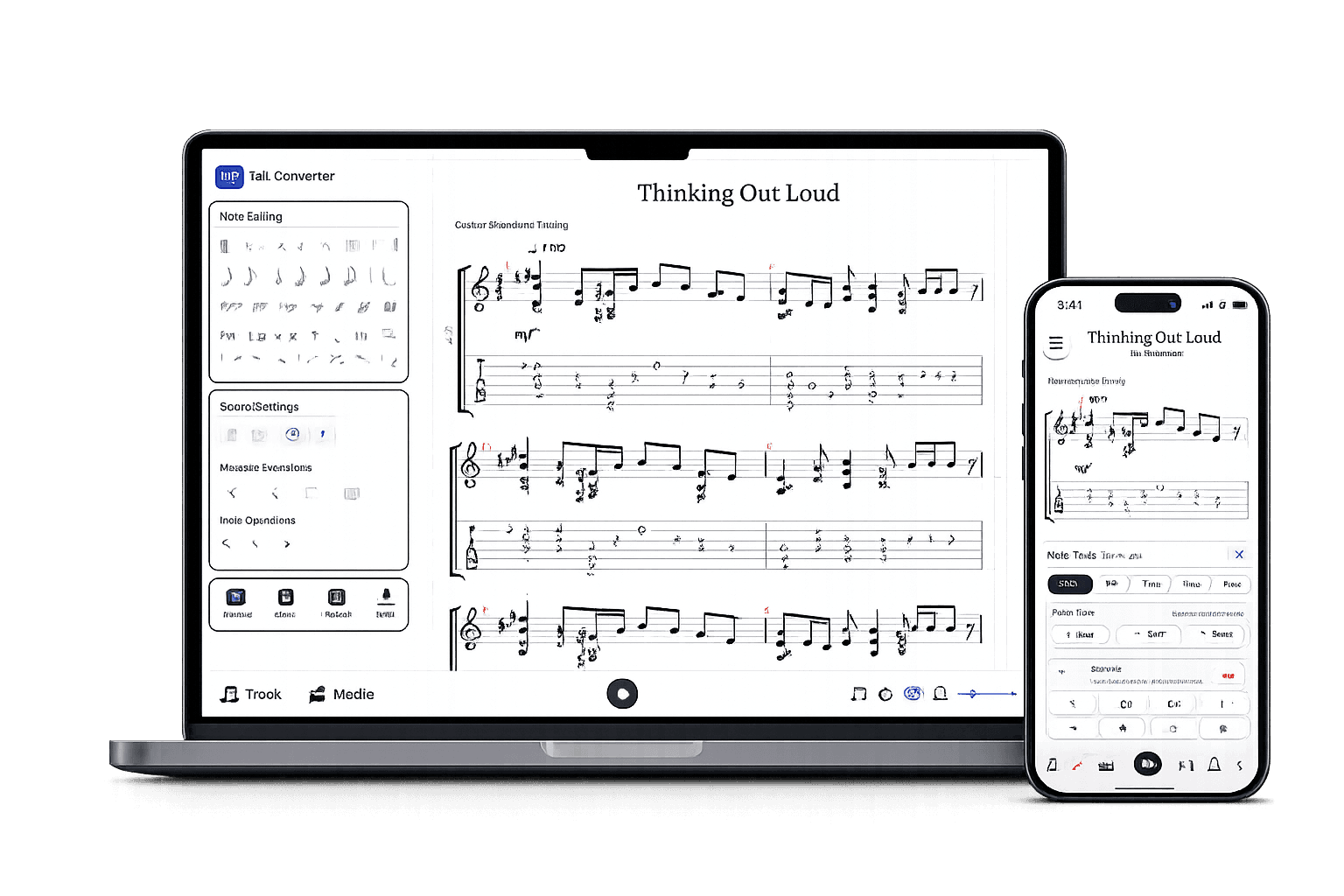
After the AI draft
A real tab editor, not a static download.
Play it back, edit any note, open GP5 or MusicXML you already have, and export in the format you need.
Edit the draft
Fix notes, timing, measures, and fret choices.
Check by ear
Play back, loop bars, match the source.
Export when ready
Guitar Pro, MIDI, PDF, MusicXML.
Guitar tabs made by Tabtify
Open any of them in the editor: play along with media sync, change a note, export to Guitar Pro or PDF.
Virtual Insanity
Jamiroquai
november rain
Guns N Roses
fix you
Coldplay
Yellow
Coldplay
Nothing Else Matters
Metallica
A Thousand Years
Sungha Jung
Viva La Vida
Boyce Avenue
The Scientist
Coldplay
Eleven Teaching Preludes
Francisco Tárrega
Champagne Supernova
Oasis
Adelita
Francisco Tárrega
Message In A Bottle
Machine Head
Frequently Asked Questions
Everything you need to know about Tabtify's AI-powered guitar tab creation platform. From audio conversion to professional export formats.
Can I convert an audio file into guitar tabs?
Can I use this as a guitar tab maker from audio?
Can I convert MP3 to tabs from this page?
Can I get a MIDI file instead of a tab?
Which audio formats work best?
Can a full song be converted from audio?
Is the generated tab editable?
Do I need to isolate the guitar before uploading?
Does this work for bass and ukulele recordings?
How accurate is the result?
Related converters
Other ways to start
Converter notes
From source to editable tab
These notes are here for setup context. The main workflow starts above in the converter, then continues in the editor.
- Accepts MP3, WAV, M4A, FLAC, AAC, AIFF, and OGG uploads.
- Describe the instruments in the recording and indicate whether someone is singing before conversion.
- The draft opens with playback, so you check the tab by ear, bar by bar.
Steps
- 01Upload an MP3, WAV, M4A, FLAC, AAC, OGG, or other supported audio file.
- 02Choose the instrument setup, then adjust tuning and capo in Advanced if needed.
- 03Run the audio-to-tabs conversion and wait for the editable studio file.
- 04Review playback, correct notes or measures, then save or export the tab.
Source quality
- Use the cleanest audio file available, especially when the guitar is mixed with vocals or drums.
- Short clips, riffs, and song sections are easier to review than full dense mixes.
- Choose the instrument setup, then adjust tuning and capo in Advanced if needed.
- Full-band songs can need manual cleanup when several instruments overlap.
- Low-bitrate MP3s, room noise, heavy effects, or hidden guitar parts can reduce note accuracy.
- Premium conversion is designed around source files or media clips up to 15 minutes.