
Audio to GP5
A MIDI file knows the pitch. A Guitar Pro file knows which string you played it on. If the end goal is a .gp you can open in Guitar Pro and keep working on, that is what this produces.
Or drag and drop here
MP3, WAV, M4A, OGG, FLAC, AAC, AIFF, MP4, WEBM, .mid or .midi
GP5, GPX, GP, MusicXML, MXL
Guitar, bass, 7-string or ukulele. Free export to Guitar Pro, MIDI, PDF, and MusicXML.
AI-Powered Guitar Tab Generation
Paste a link or file, get an editable draft, then play and export in the browser.
01
Paste a link or upload audio
YouTube, TikTok, Instagram, MIDI, or a recording.
02
AI writes the tab draft
Notes and rhythm land as an editable guitar tab.
03
Play, tweak, export
Loop hard bars. Export GP5, MIDI, PDF, MusicXML.
Use cases
What players convert here
Starting a real transcription
Get the skeleton out of the audio, then finish the detail work in Guitar Pro.
Band charts
Produce a .gp your bandmates can open in the software they already use.
Archiving your own material
Turn recordings of your parts into editable files instead of leaving them as audio.
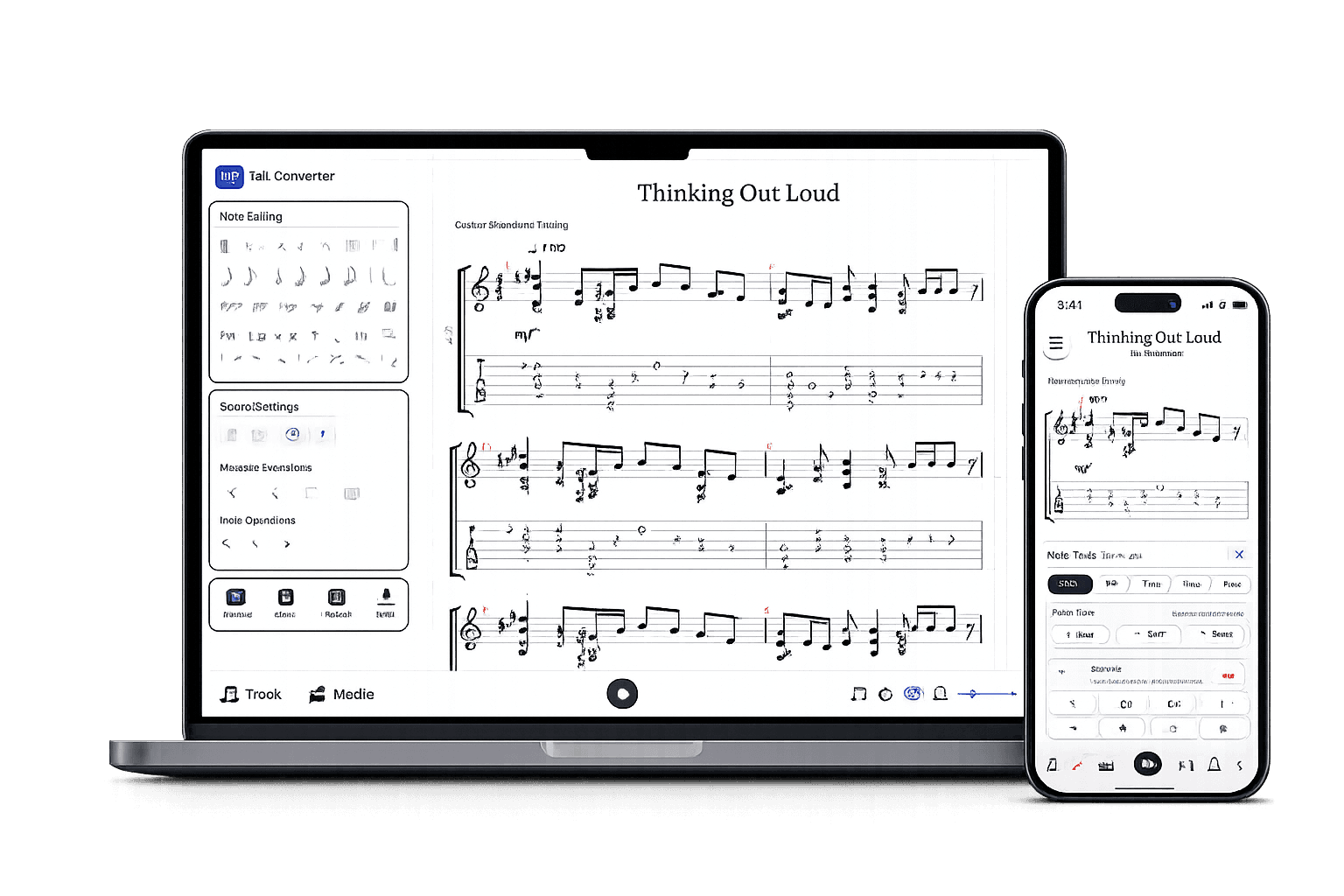
After the AI draft
A real tab editor, not a static download.
Play it back, edit any note, open GP5 or MusicXML you already have, and export in the format you need.
Edit the draft
Fix notes, timing, measures, and fret choices.
Check by ear
Play back, loop bars, match the source.
Export when ready
Guitar Pro, MIDI, PDF, MusicXML.
Tabs made by Tabtify
Open any of them in the editor: play along with media sync, change a note, export to Guitar Pro or PDF.
Boulevard of Broken Dreams
Green Day
november rain
Guns N Roses
Californication
Red Hot Chili Peppers
Layla
Eric Clapton
Basket Case
Green Day
Wonderful Tonight
Eric Clapton
Cocaine
Eric Clapton
Every Breath You Take
The Police
Enter Sandman
Metallica
Thunderstruck
AC/DC
Paradise City
Guns N Roses
Blackbird
The Beatles
Frequently Asked Questions
Everything you need to know about Tabtify's AI-powered guitar tab creation platform. From audio conversion to professional export formats.
Which Guitar Pro versions open the file?
What does a GP5 give me that a MIDI file does not?
Can I change the fingering before exporting?
Does the export cost extra?
Related converters
Other ways to start
Converter notes
From source to editable tab
These notes are here for setup context. The main workflow starts above in the converter, then continues in the editor.
- Exports a Guitar Pro file that opens in Guitar Pro 7 and 8.
- Bends, slides, and hammer-ons survive the export instead of flattening to plain notes.
- String and fret assignment respects the tuning and capo you set.
Steps
- 01Upload your audio in the Audio tab.
- 02Set instrument, tuning, capo, and string count to match the real part.
- 03Run the conversion and check the fret positions in the editor.
- 04Move notes to better positions where needed, then export Guitar Pro.
Source quality
- Set the tuning before converting. Fixing fret positions afterwards is slower than getting them right up front.
- Tell it the right instrument. Bass and guitar map to completely different string sets.
- Convert one part at a time when the recording has several guitars.
- Fret choice is a judgment call, so the AI picks something playable rather than what you actually played.
- Articulation detection is good on clear recordings and unreliable on dense ones.
- Conversion is built around sources up to 15 minutes.