
YouTube to Bass Guitar Tab
Bass parts are often buried under drums and guitar in a full-band YouTube video. Paste the link, then choose the bass setup so Tabtify focuses the transcription on the low end.
Or drag and drop here
MP3, WAV, M4A, OGG, FLAC, AAC, AIFF, MP4, WEBM, .mid or .midi
GP5, GPX, GP, MusicXML, MXL
Guitar, bass, 7-string or ukulele. Free export to Guitar Pro, MIDI, PDF, and MusicXML.
AI-Powered Guitar Tab Generation
Paste a link or file, get an editable draft, then play and export in the browser.
01
Paste a link or upload audio
YouTube, TikTok, Instagram, MIDI, or a recording.
02
AI writes the tab draft
Notes and rhythm land as an editable guitar tab.
03
Play, tweak, export
Loop hard bars. Export GP5, MIDI, PDF, MusicXML.
Use cases
What players convert here
Bass playthroughs
Convert a public bass playthrough video into a tab you can loop and check note-by-note.
Live performance bass lines
Pull the bass part from a live show clip when the studio recording isn't available.
Cover bass parts
Learn a bass cover by turning the video into editable tablature instead of transcribing by ear.
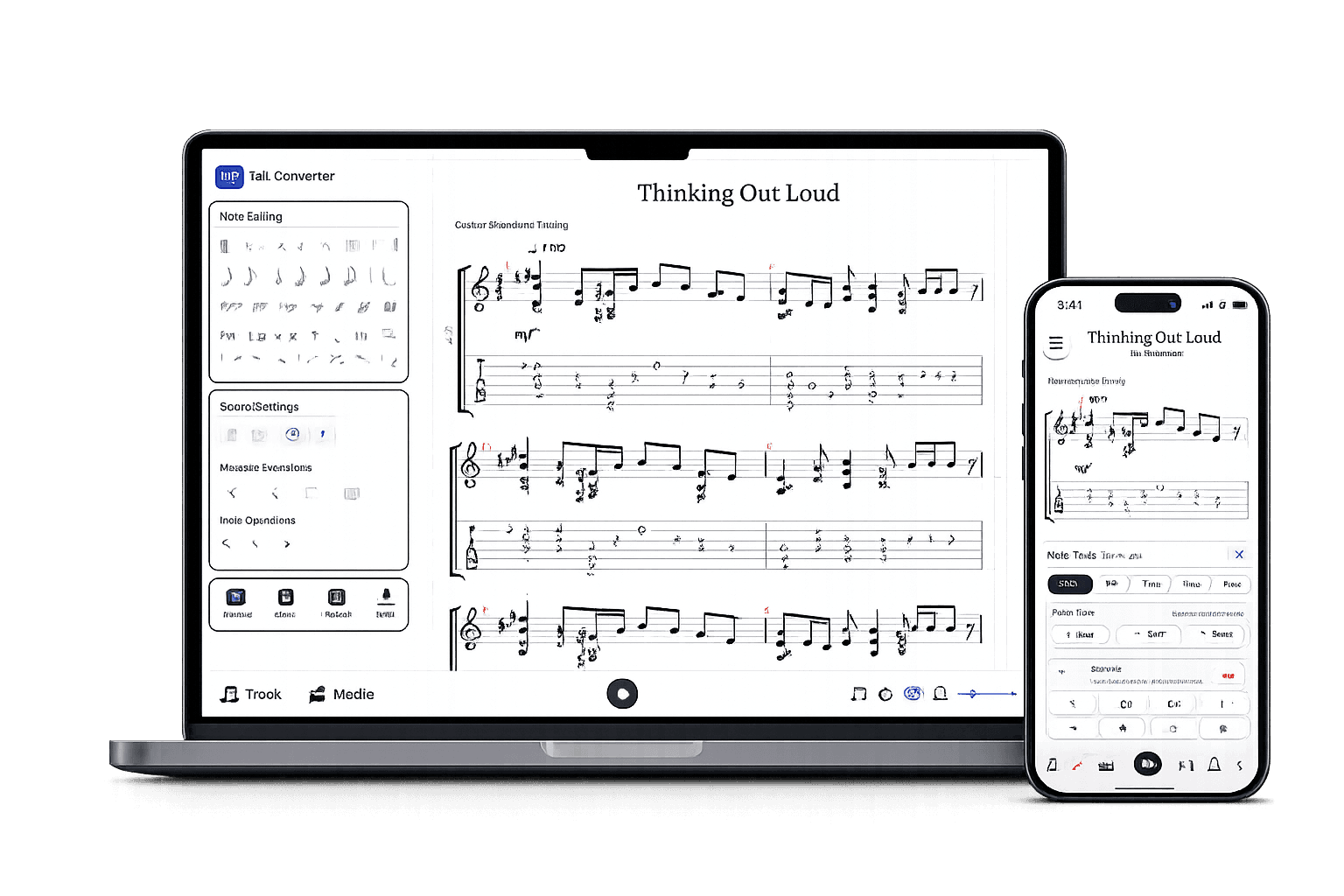
After the AI draft
A real tab editor, not a static download.
Play it back, edit any note, open GP5 or MusicXML you already have, and export in the format you need.
Edit the draft
Fix notes, timing, measures, and fret choices.
Check by ear
Play back, loop bars, match the source.
Export when ready
Guitar Pro, MIDI, PDF, MusicXML.
Bass tabs made by Tabtify
Open any of them in the editor: play along with media sync, change a note, export to Guitar Pro or PDF.
Come As You Are
Nirvana
Wonderful Tonight
Eric Clapton
Here Cpmes The Sun
The Beatles
Cocaine
Eric Clapton
Smells Like Teen Spirit
Nirvana
Basket Case
Green Day
Every Breath You Take
The Police
Hysteria (intro)
Muse
Fear Of The Dark
Iron Maiden
Thunderstruck
AC/DC
Wonderwall
Oasis
One
Metallica
Frequently Asked Questions
Everything you need to know about Tabtify's AI-powered guitar tab creation platform. From audio conversion to professional export formats.
Can I pull just the bass line from a full-band YouTube video?
Does this support 5-string and 6-string bass from YouTube sources?
Why does a live performance bass line come out less accurate than a studio playthrough?
Related converters
Other ways to start
Converter notes
From source to editable tab
These notes are here for setup context. The main workflow starts above in the converter, then continues in the editor.
- Works with public YouTube bass playthroughs, live performances, and cover videos.
- Choose 4-string, 5-string, or 6-string setup before conversion for accurate low-register mapping.
- Same media preview and editor workflow as guitar and ukulele YouTube conversions.
Steps
- 01Paste the public YouTube bass video URL into the Media tab.
- 02Confirm the detected title, channel, and duration.
- 03Choose the bass setup and 4, 5, or 6 strings; adjust tuning in Advanced if needed.
- 04Convert the bass line and refine the groove in the editor.
Source quality
- Prefer videos where the bass sits forward in the mix, such as bass playthrough or isolated-track videos.
- Full-band live videos usually need more cleanup than studio playthroughs, since kick drum and rhythm guitar overlap the low end.
- Choose 4-string, 5-string, or 6-string setup before conversion, since the wrong string count can push notes into awkward positions.
- Full-band video mixes make the bass line harder to isolate than a dedicated bass playthrough.
- Videos with heavy low-end distortion or a muddy live mix can reduce note accuracy.
- Private, region-limited, or removed YouTube videos may not expose usable audio.