
Song to Guitar Tab
This broad page gives searchers a clear route from song audio to a playable tab while still explaining when clean guitar-forward sources work best.
Or drag and drop here
MP3, WAV, M4A, OGG, FLAC, AAC, AIFF, .mid or .midi
GP5, GPX, GP, MusicXML, MXL
Guitar, bass, 7-string or ukulele. Exports to Guitar Pro and MIDI.
AI-Powered Guitar Tab Generation
Paste a link or file, get an editable draft, then play and export in the browser.
01
Paste a link or upload audio
YouTube, TikTok, Instagram, MIDI, or a recording.
02
AI writes the tab draft
Notes and rhythm land as an editable guitar tab.
03
Play, tweak, export
Loop hard bars. Export GP5, MIDI, PDF, MusicXML.
Use cases
What players convert here
Practice songs
Create a draft tab for a song section you want to learn, then refine the details in the studio.
Teaching material
Build an editable tab from a lesson recording or song excerpt for student follow-up.
Arrangement drafts
Use AI transcription as the first pass before arranging the result for your tuning and skill level.
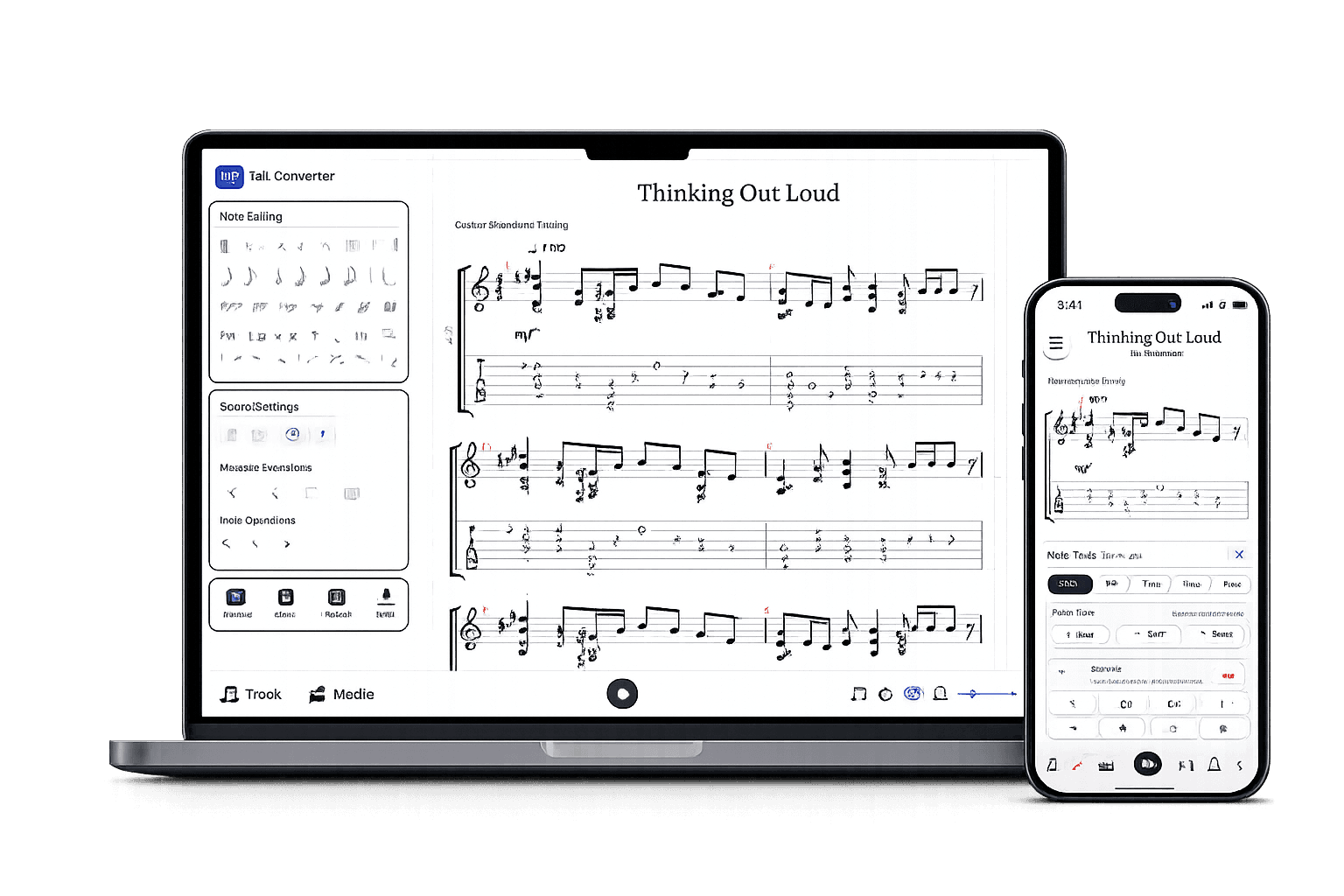
After the AI draft
A real tab editor, not a static download.
Play it back, edit any note, open GP5 or MusicXML you already have, and export in the format you need.
Edit the draft
Fix notes, timing, measures, and fret choices.
Check by ear
Play back, loop bars, match the source.
Export when ready
Guitar Pro, MIDI, PDF, MusicXML.
Tabs made with Tabtify
Real AI drafts you can open in the editor - same path as convert.
Frequently Asked Questions
Everything you need to know about Tabtify's AI-powered guitar tab creation platform. From audio conversion to professional export formats.
Can Tabtify turn a full song into guitar tab?
Is the result an editable tab or just a preview?
Should beginners convert full songs first?
How long can the song be?
Do I get the whole arrangement or one instrument?
Related converters
Other ways to start
Converter notes
From source to editable tab
These notes are here for setup context. The main workflow starts above in the converter, then continues in the editor.
- Start from an uploaded audio file, public media link, MIDI file, or recording.
- Choose the target instrument and setup before transcription.
- Edit the generated tab instead of treating AI output as final.
Steps
- 01Upload an audio file, paste a public media URL, or start from MIDI.
- 02Choose the instrument, tuning, capo, and playing profile.
- 03Run the conversion and open the result in the editor.
- 04Correct notes, timing, and export formats after listening back.
Source quality
- Use stems or guitar-forward mixes when available.
- Shorter song sections are easier to review and correct than full tracks.
- Set the actual tuning and capo before conversion to avoid awkward positions.
- Full commercial mixes can include overlapping instruments that reduce precision.
- AI transcription creates a strong draft, but human cleanup is still valuable.
- Use source material responsibly and follow the rights of the original content.