
Audio to Electric Guitar Tab
Distortion, gain, and effects change how a note looks to a transcription model. Upload an electric guitar recording and set the electric guitar profile so Tabtify accounts for that difference before mapping the tab.
Or drag and drop here
MP3, WAV, M4A, OGG, FLAC, AAC, AIFF, MP4, WEBM, .mid or .midi
GP5, GPX, GP, MusicXML, MXL
Guitar, bass, 7-string or ukulele. Exports to Guitar Pro and MIDI.
AI-Powered Guitar Tab Generation
Paste a link or file, get an editable draft, then play and export in the browser.
01
Paste a link or upload audio
YouTube, TikTok, Instagram, MIDI, or a recording.
02
AI writes the tab draft
Notes and rhythm land as an editable guitar tab.
03
Play, tweak, export
Loop hard bars. Export GP5, MIDI, PDF, MusicXML.
Use cases
What players convert here
Riffs and rhythm parts
Convert palm-muted riffs and rhythm parts where distortion can blur individual notes.
Guitar solos
Turn a lead or solo recording into a tab draft, including bends, slides, and vibrato you can refine in the editor.
7-string and drop-tuned parts
Use the extended-range setup for low, heavy riffs that don't fit a standard 6-string layout.
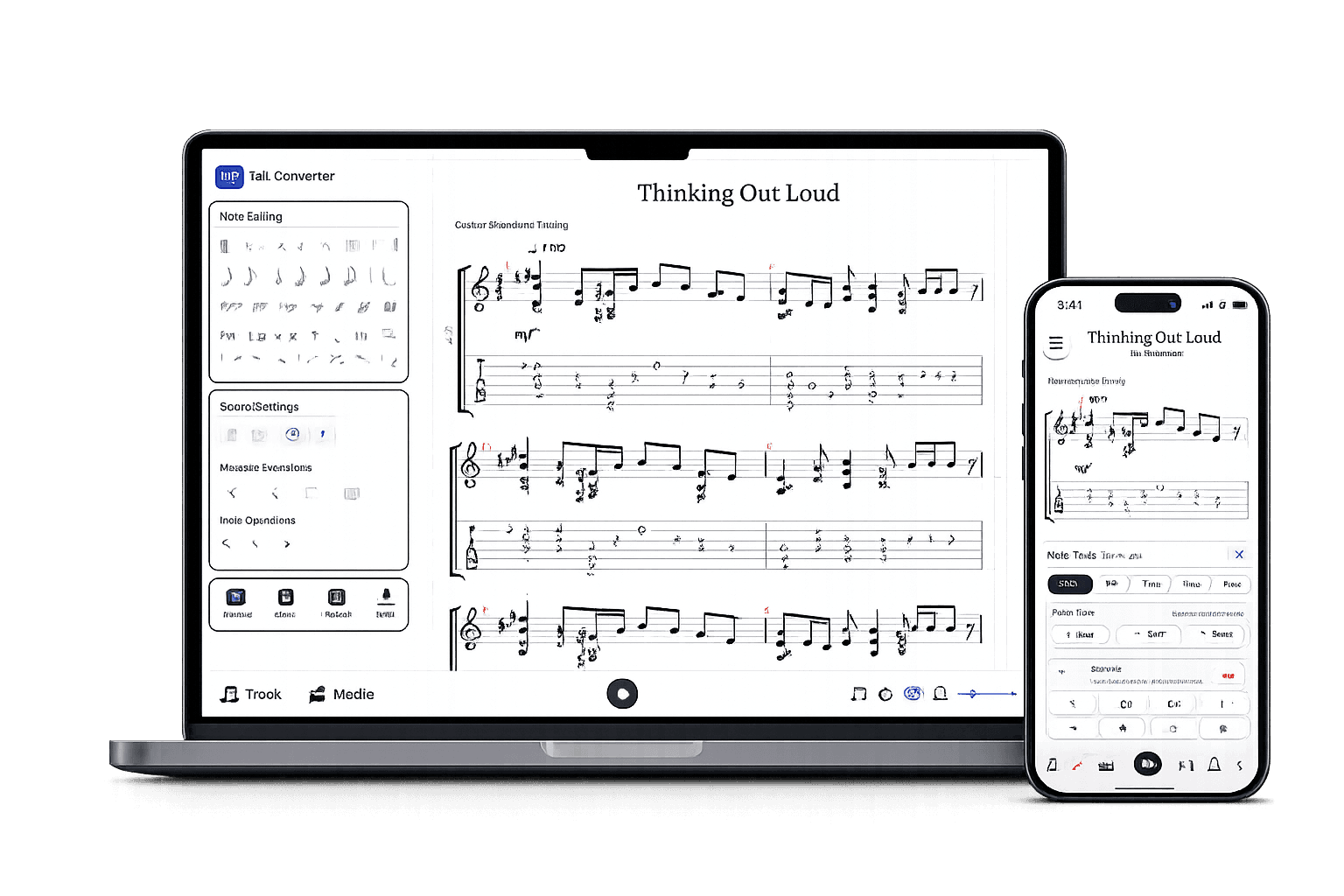
After the AI draft
A real tab editor, not a static download.
Play it back, edit any note, open GP5 or MusicXML you already have, and export in the format you need.
Edit the draft
Fix notes, timing, measures, and fret choices.
Check by ear
Play back, loop bars, match the source.
Export when ready
Guitar Pro, MIDI, PDF, MusicXML.
Electric guitar tabs made by Tabtify
Open any of them in the editor: play along with media sync, change a note, export to Guitar Pro or PDF.
505
Arctic Monkeys
Californication
Red Hot Chili Peppers
One
Metallica
Cocaine
Eric Clapton
Hallowed Be Thy Name
Iron Maiden
R U Mine
Arctic Monkeys
Every Breath You Take
The Police
under pressure
Queen
Basket Case
Green Day
Black Dog
Led Zeppelin
Boulevard of Broken Dreams
Green Day
Sweet Child O' Mine
Guns N Roses
Frequently Asked Questions
Everything you need to know about Tabtify's AI-powered guitar tab creation platform. From audio conversion to professional export formats.
Does distortion affect transcription accuracy?
Can I convert 7-string or drop-tuned electric guitar?
Does the AI detect bends, slides, and vibrato?
Related converters
Other ways to start
Converter notes
From source to editable tab
These notes are here for setup context. The main workflow starts above in the converter, then continues in the editor.
- Tuned for rock, metal, blues, and clean electric tones, including palm-muted and high-gain playing.
- Choose standard or extended-range (7-string) electric setup before conversion.
- Works from studio recordings, DI tracks, or full-band mixes with the electric guitar forward.
Steps
- 01Upload the electric guitar recording, ideally a DI track or forward-mixed take.
- 02Choose standard or 7-string electric setup, tuning, and playing profile (lead, rhythm, or mixed).
- 03Run the conversion and open the generated tab in the studio.
- 04Check bends, slides, palm mutes, and repeated riffs, then save or export.
Source quality
- A clean DI or re-amped signal transcribes more precisely than a heavily distorted full-band mix.
- Set the real tuning first, especially for drop tunings, since distortion makes mistuned detection harder to fix by ear later.
- Isolate rhythm and lead parts separately when a recording has both, rather than converting them together.
- Heavy distortion and high gain can blur fast palm-muted notes and compress dynamics, reducing note-level accuracy.
- Dense full-band mixes with rhythm and lead guitar playing together are harder to separate than a solo DI track.
- Extreme effects like heavy delay, reverb wash, or pitch-shifting can confuse pitch detection.