
How-to
A 30-Minute Guitar Practice Routine That Actually Works
Thirty focused minutes a day beats a three-hour session on Sunday. The routine below splits the half hour into four timed blocks, so you never sit down wondering what to work on, and every block feeds the one skill that keeps people playing: finishing real songs.
In short
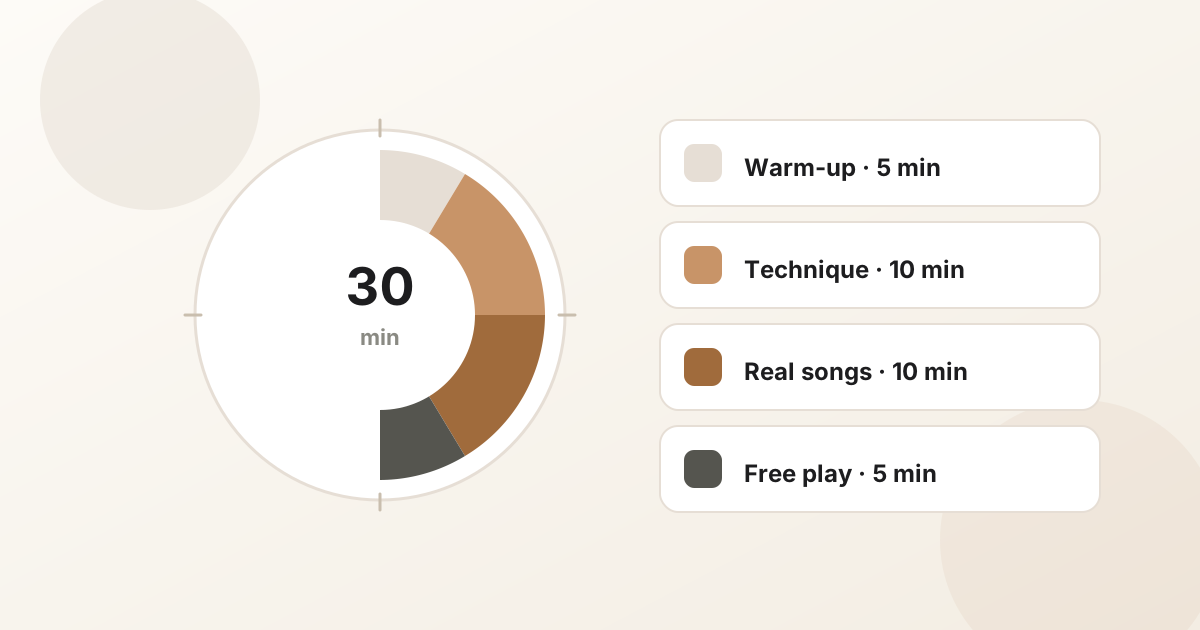
A daily 30-minute guitar practice plan split into four timed blocks - warm-up, technique, real songs, and free play - with ways to track progress week over week.
Why short daily practice wins
Motor learning consolidates between sessions, not during them. Six half-hour sessions give your hands six sleep cycles to lock in movement; one long weekend session gives them one. This is why players who practice daily progress visibly faster than binge practicers logging the same total hours.
The other advantage is honesty. In a 30-minute window there is no room to noodle through the songs you already know for an hour and call it practice. The clock forces choices.
The four blocks at a glance
The split is deliberately boring: 5 minutes of warm-up, 10 of technique, 10 of repertoire, 5 of free play. Boring is what makes it repeatable, and repeatable is what makes it work.
Set a visible timer for each block. When the timer ends, move on even mid-exercise. Protecting the later blocks from the earlier ones is the entire trick - without the timer, technique eats the whole half hour.
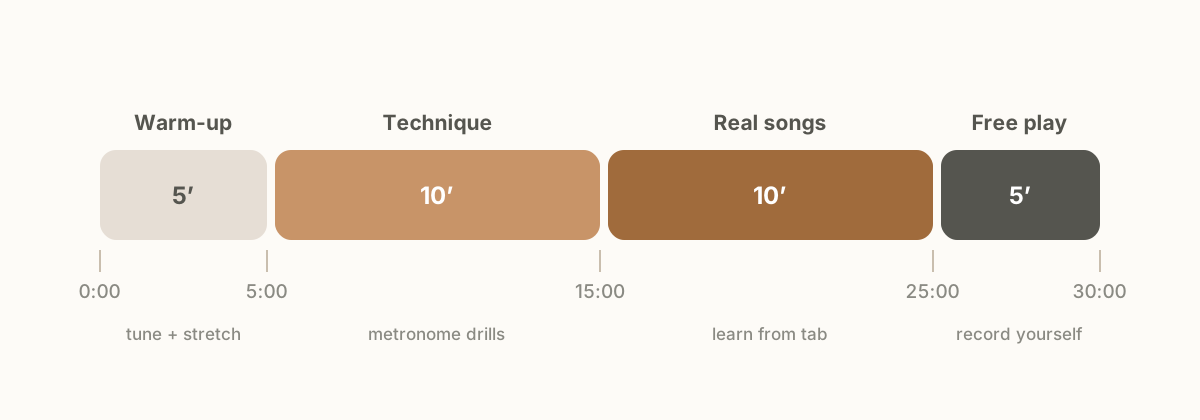
Minutes 0-5: warm up and tune
Start every session by tuning - practicing on an out-of-tune guitar trains your ear to accept wrong pitches. A free online tuner takes under a minute.
Then wake the hands up: one minute of a simple chromatic crawl (frets 1-2-3-4 across the strings) starting slow, and a few big chord grips held and released. The point is blood flow and clean contact, not speed. Guitarists who skip straight to fast playing pay for it in sloppy takes ten minutes later.
Minutes 5-15: one technique, with a metronome
Pick exactly one technical focus per week: chord changes, alternate picking, a scale shape, barre chords, hammer-on strength. Ten minutes on one thing daily for a week outperforms sampling five things every day.
Use a metronome and write down the tempo you end at. Tomorrow, start there. That number going up week over week is the most reliable progress signal in guitar practice, and it is the part most self-taught players never do.
- One focus per week, not per day
- Metronome on, tempo written down after every session
- Raise the tempo only when three clean repetitions in a row feel easy
Minutes 15-25: real songs, from tab
This block is why the routine survives. Technique without repertoire is how people quit; a song you can actually play end to end is what keeps you picking the guitar up on tired days.
Work from a tab of a song you love, two to four bars at a time, at reduced speed. If the song only exists as audio or a YouTube video, convert it to an editable tab first so you can slow it down and loop the hard bars. Finish this block by playing the full section you know so far, even if it is only eight bars.
Minutes 25-30: free play and one recording
The last five minutes have no rules: improvise, strum, play the riff that made you buy a guitar. This block is the reward that makes the disciplined twenty-five minutes before it sustainable.
Once a week, use this block to record yourself playing the current song section on your phone. The recording will sound worse than it felt - everyone's does - and thirty days of recordings will show more progress than your memory ever will.
Scaling the split up or down
With 15 minutes: 2 warm-up, 6 technique, 6 song, 1 free. The ratios matter more than the totals.
With an hour, resist the urge to double everything. Keep warm-up at 5, cap technique at 20 across two focuses, give songs 25, and keep free play at 10. Repertoire scales best with extra time; technique drills return less after the first twenty minutes.
Common questions
Is 30 minutes of guitar practice a day enough?
Yes, if it is structured. Thirty focused daily minutes with a timer and a written tempo log outpaces multi-hour unfocused sessions for almost everyone short of conservatory students.
Should I practice every day or take rest days?
Daily is ideal because motor skills consolidate between sessions, but five or six days a week works fine. Consistency across weeks matters far more than any single missed day.
Do beginners really need a metronome?
Yes, from the first month. Timing problems are much harder to fix after a year of unmetered practice than fret-hand problems. Start slower than feels necessary; slow and clean always beats fast and smeared.
How long until I see progress with this routine?
The tempo log shows movement within two weeks, and a weekly phone recording makes the change audible within a month. Most players can play a full simple song cleanly after six to eight weeks of this split.
Next steps