
How-to
How to Learn Guitar Songs by Ear, Step by Step
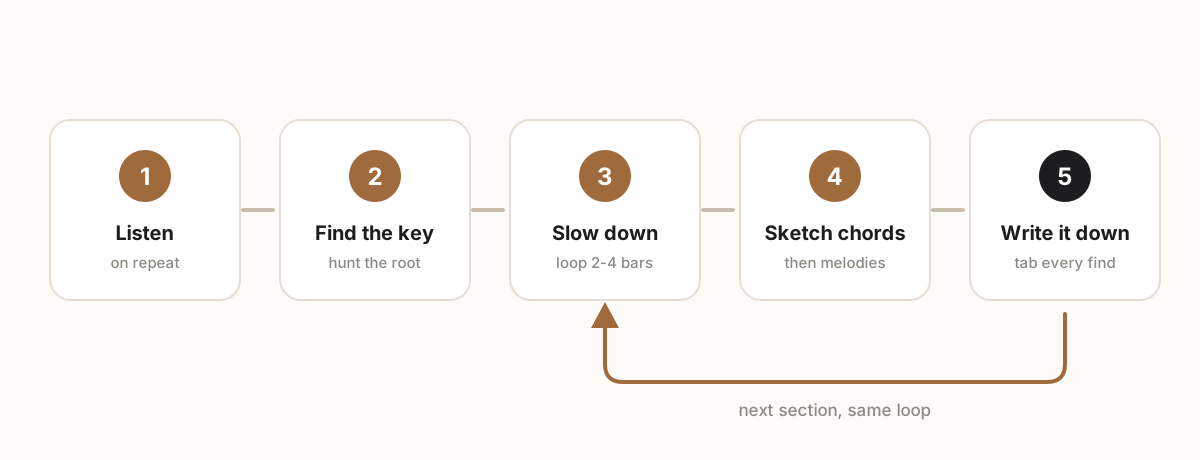
Learning by ear looks like a talent from the outside. Up close it is a repeatable five-step process that any player can run, and every pass through it makes the next song faster. Here is the process, plus where AI transcription honestly fits in.
In short
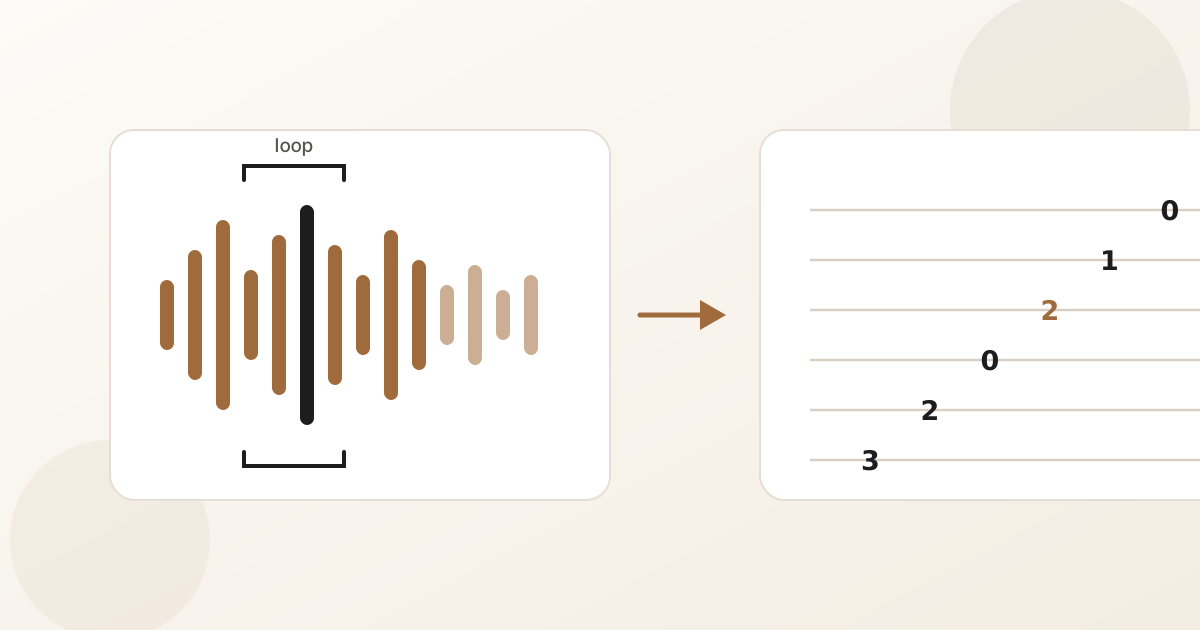
A five-step method for learning songs by ear on guitar: pick the right song, find the key, slow and loop short sections, sketch chords before melodies, and tab what you find.
Why bother when tabs exist
Because the skill compounds. The first song you learn by ear might take a week; the tenth takes an afternoon. Somewhere along the way you start hearing chord changes coming before they arrive, which quietly upgrades everything else: improvising, writing, and catching your own wrong notes.
Tabs and ear learning are not rivals. Checking a tab after you have made your own attempt is one of the best correction loops in music practice - you find out precisely what your ear missed.
Step 1: pick a song your ear can win
The classic mistake is starting with a solo. Start with a song you have heard hundreds of times, in a guitar-forward mix, with three or four chords. Knowing the song deeply matters more than the song being easy: your memory of how it should sound is the reference your ear checks against.
Good first targets are acoustic singer-songwriter tracks and classic rock rhythm parts. Save busy mixes, jazz harmony, and anything heavily layered for later rounds.
Step 2: find the key and the root notes
Play the recording and hunt on the low E and A strings for the note that feels like home - the one where the tension resolves. That is the root of the key, and it is usually the bass note of the first or last chord.
Once you have the root, the likely chords are no longer a mystery. In a major key, the three chords built on the 1st, 4th, and 5th notes cover a huge share of popular music, with the relative minor as the fourth suspect. You are no longer guessing from all possible chords; you are choosing between four.
Step 3: slow it down and loop small sections
Work in two-to-four-bar chunks, looped, at 50-75% speed. YouTube's playback speed control works; a player with A-B looping is better. Slowing down does two things: it gives your ear time to separate the guitar from the mix, and it turns fast passages into sequences of individually hearable notes.
Stay on one loop until you can hum the part accurately before you try to find it on the neck. If you cannot sing it, you have not actually heard it yet - the fretboard search will be blind guessing.
Step 4: sketch chords first, melodies second
Chords are the skeleton; get them down for a whole section before chasing any lick. Match the bass note first, then test major versus minor on top - that one decision is most of the difficulty.
For riffs and melodies inside the section, find the first note by trial on the neck, then notice direction: does the line move up or down, by a step or a jump? Direction plus rhythm narrows candidates fast. Expect to be wrong often; wrong-then-corrected is exactly the rep that trains the ear.
Step 5: write down everything you find
Tab each section as soon as it is verified against the recording. Working memory holds a couple of phrases at best; by the time you crack the bridge, an unwritten verse riff is half gone, and next session starts from zero.
Use paper, a text file, or a tab editor - the editor wins once the song is longer than a page, because you can play your transcription back and hear your mistakes immediately. A wrong note in the playback jumps out even when it looked right on the page.
Where AI transcription honestly fits
AI audio-to-tab tools can hand you a draft of the whole song in minutes, which raises a fair question: why train the ear at all? Use both, in this order: make your own attempt on a section first, then run the audio through a converter and compare.
The comparison is the lesson. Where the AI draft agrees with you, your ear was right. Where it differs, slow the recording and find out which of you is wrong - the tool has no ego about it and neither should you. This workflow builds the skill while removing the discouraging part: staring at a section your ear cannot crack yet with no reference to check against.
- Attempt first, convert second - the order is the whole method
- Use the AI draft as a reference answer, not a replacement for listening
- For fast solos, let the converter do the note-finding and keep your ear on rhythm and feel
Common questions
Do I need perfect pitch to learn songs by ear?
No. Ear learning runs on relative pitch - hearing distances between notes - which is trainable at any age. Perfect pitch is neither required nor particularly common among professional players.
How long does it take to learn a song by ear?
A three-chord song might take a beginner a few sessions the first time. The process accelerates sharply: after five to ten songs, simple tracks come together in under an hour.
What should I use to slow songs down?
YouTube playback speed is the zero-setup option. Dedicated players add A-B looping, which matters more than the slowdown itself. Tab editors with synced audio let you loop the recording and your transcription together.
Is using AI transcription cheating?
Not if you attempt the section by ear first and use the AI tab as an answer key. Comparing your attempt against a reference is standard ear training pedagogy; the tool just makes the reference available for any song.
Next steps